


MTI Viewpoint
Insights shared by industry relative to healthcare and the advancement of medical technology.
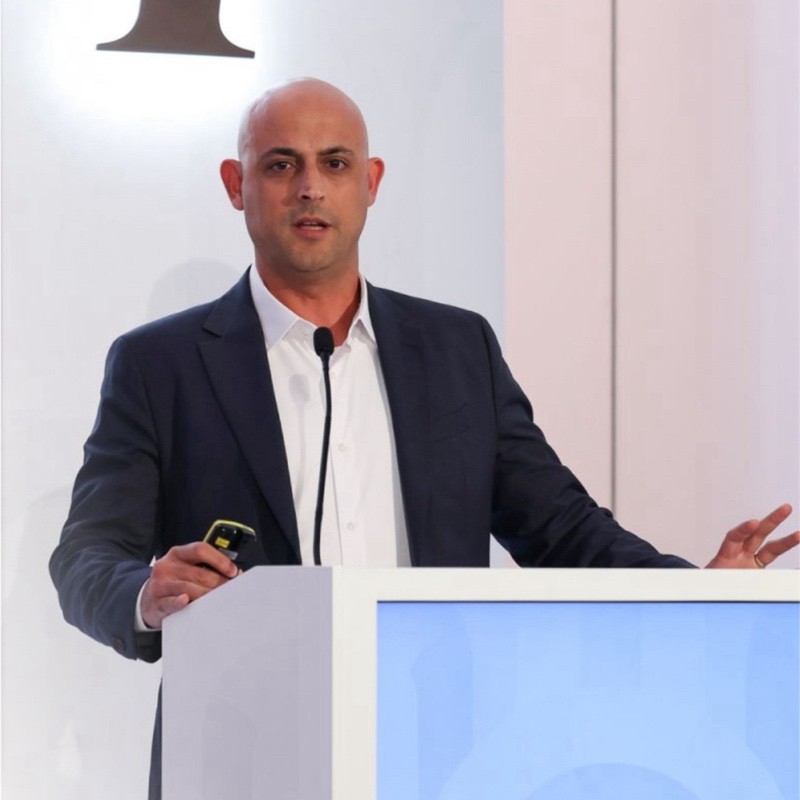
Moshe Barel is the CEO and co-founder of AccuLine. He has over two decades of experience leading MedTech programs across clinical development, regulatory strategy, and venture-backed company building. He can be reached out at moshe@acculine-medical.com.
Deep-tech MedTech companies operate at the intersection of two fundamentally different systems. Medicine, science, and regulation move deliberately, demand evidence, and penalize shortcuts. Venture capital, by contrast, is structured around speed, milestones, and finite fund lifecycles. Successfully scaling a MedTech company does not mean choosing one system over the other but learning how to operate credibly within both.
Unlike software or consumer technology, MedTech progress is not driven primarily by engineering velocity. Development timelines are constrained by biology, clinical variability, regulatory frameworks, and patient safety. These constraints are structural. No amount of capital or talent can compress certain phases without increasing risk. Problems arise when venture expectations from faster-moving sectors are applied without adaptation.
Why “moving faster” often backfires
One of the most common early-stage mistakes in MedTech is attempting to accelerate clinical validation to meet perceived investor timelines. Founders feel pressure to show traction, while investors look for clear inflection points. The result is often underpowered studies, poorly defined endpoints, or premature commercial narratives.
These shortcuts rarely save time. More often, they introduce rework, regulatory friction, or credibility gaps that surface later – when costs are higher and options are fewer. Clinical rigor is not a bureaucratic burden; it is a form of risk management. Weak evidence does not speed scale -it delays it.
Sequencing matters more than speed
The real challenge in scaling deep-tech MedTech is not speed versus rigor, but sequencing. Progress depends on defining the right milestones at the right time. Early value creation is often quiet and unglamorous: locking an intended use, selecting clinically meaningful endpoints, building repeatable data pipelines, or aligning with credible clinical partners.
These steps may not generate headlines, but they materially de-risk the company. Experienced MedTech investors increasingly recognize this and evaluate teams less on absolute speed and more on disciplined execution. Key questions include: Are assumptions being tested properly? Are risks being retired systematically? Is capital being deployed to reduce uncertainty rather than inflate valuation narratives?
Capital efficiency and long-horizon communication
In deep-tech MedTech, capital efficiency does not mean minimizing spend. It means spending with intent. Early investment in clinical quality, regulatory strategy, and data integrity often shortens the total path to market, even if it lengthens individual phases. Companies that over-optimize for short-term burn reduction frequently pay for it later through redesigns, delays, or failed trials.
Communication becomes critical in this context. Progress in MedTech is often binary and data-driven, making storytelling harder but more important. Founders must communicate momentum without exaggeration, explain delays without defensiveness, and frame neutral or negative data as learning rather than failure. Transparency builds trust, especially when timelines stretch.
Not all delays are equal. Some indicate execution failures; others reflect scientific uncertainty. Boards and investors who understand this distinction can provide far more constructive support. Likewise, teams that surface risks early tend to move faster over the long run than those that hide behind optimism.
Building companies that deserve to exist
The most durable MedTech companies are built by leaders who respect the pace of science while understanding venture constraints. They design development plans that satisfy regulators and clinicians first, while translating rigor into investor-relevant milestones. They resist overselling early data and focus instead on building credibility that compounds over time.
Scaling deep-tech MedTech is not about winning a race. It is about finishing the journey with a product that works, evidence that holds, and a company that earns its place in clinical practice. Venture timelines matter – but only when aligned with the realities of medicine.