
Trump Picks RFK Jr. as Health Secretary: What can the MedTech industry expect?

Could MedTech find itself as the collateral damage if an RFK Jr. run HHS “goes wild” with FDA regulation of pharma and processed foods?

Could MedTech find itself as the collateral damage if an RFK Jr. run HHS “goes wild” with FDA regulation of pharma and processed foods?

The MDIC Annual Public Forum 2024 kicked off this week with experts from the National Evaluation System for health Technology (NEST), the Centers for Medicare and Medicaid Services (CMS), and the FDA. Topics included the future of real-world evidence (RWE) and the integration of AI into the healthcare ecosystem and how can we leverage emerging technologies to bring innovative and safer solutions to patients.

In the light of new research, Peter Muller and Mike Baird of Schlafender Hase assess how well Class 2 and 3 device manufacturers in Europe and the US are adapting to a rise in regulatory controls.

Congress must decide the future of the Acute Hospital Care at Home (AHCAH) program, an initiative of the Centers for Medicare & Medicaid Services (CMS) that, without legislative action, will expire on December 31, 2024. To ensure beneficiaries can receive various levels of care in their preferred settings, this brief provides immediate–term federal policy reform recommendations for the potential reauthorization of the AHCAH model while outlining key issues for policymakers to consider when further research and data emerge.
The U.S. Food and Drug Administration’s (FDA’s) Center for Devices and Radiological Health (CDRH) has developed a discussion paper, Health Equity For Medical Devices, and seeks input from the public on advancing health equity on the context of medical devices.
Q2/24 Life Science and Health Care Law Updates by Hogan Lovells including key trends in the EU and Big Five (France, Germany, Italy, Spain, UK) regulatory, corporate, compliance, competition, and privacy.
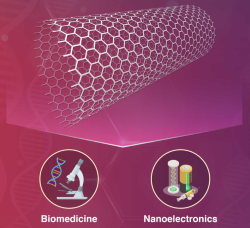

Single-walled carbon nanotubes (SWCNTs) hold promise for biomedicine and nanoelectronics, yet the functionalization with single-stranded DNA (ssDNA) remains a challenge. In a new study, researchers from Korea functionalized SWCNTs using high-affinity ssDNA sequences identified through high-throughput selection. They demonstrated the effectivity and stability of these constructs using molecular dynamics simulations. Machine-learning models were used to accurately predict patterns that govern ssDNA-SWCNT binding affinity. These findings provide valuable insights into the interactions between ssDNA and SWCNTs.
Law firm, Hogan Lovells, analyzes the changes to the updated enforcement policy and provide key takeaways for entities responsible for communication regarding approved/cleared medical products.
Law firm, Hogan Lovells, analyses the implications of the AI Act for the Medtech sector and highlight a number of key challenges for medical device manufacturers and their partners in aligning conformity routes for their products under the AI Act.


Cevian Capital increased its position in Smith & Nephew to a 5% stake in the British medical equipment maker, making it Smith & Nephew’s second largest shareholder according to reports by Reuters.