• Home
  • About Us
  • Advisory Board
  • Advertise
  • Editorial Submissions
  • Contact Us
  • Subscribe to Newsletter

  • Follow me on Twitter
  • Friend me on Facebook
  • Connect with me on LinkedIn
  • Subscribe to me on YouTube
  • Subscribe to my RSS Feed

Menu

Skip to content
  • MedTech Economics
  • Policy
  • Manufacturing Execution
  • Product Design & Development
  • Quality & Compliance
  • Digital Health
  • Resource Library
  • Events & Webinars

Product Design & Development

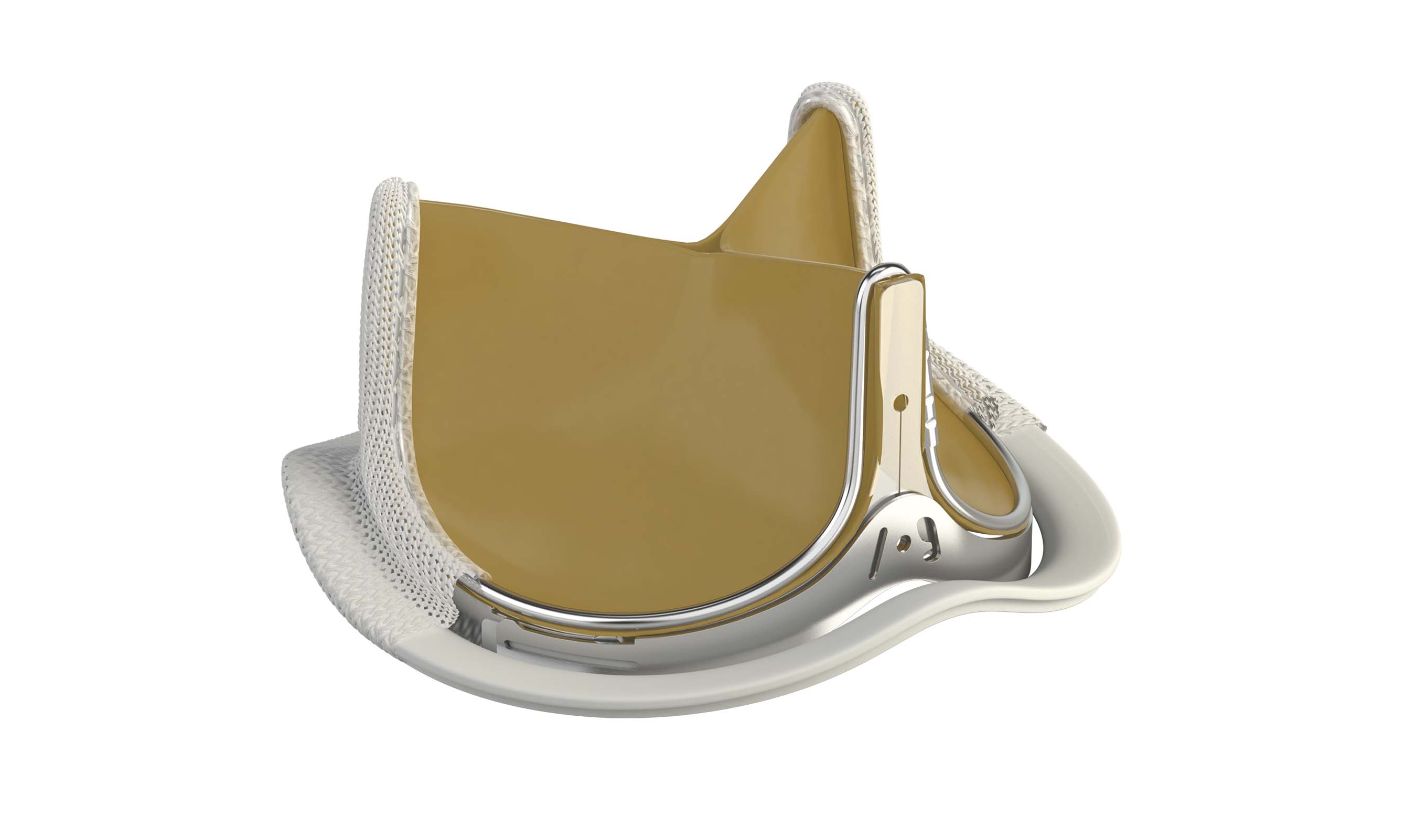
INSPIRIS valve, Edwards Lifesciences
July 10, 2017
INSPIRIS valve, Edwards Lifesciences

Edwards Lifesciences Receives FDA Approval for Its New Class of Heart Valves

By MedTech Intelligence Staff

The Inspiris Resilia valve is intended for aortic valve replacement.

Continue reading →

magnifying glass
June 28, 2017
magnifying glass

Market Research Helps Device Companies Do the Homework

By Maria Fontanazza

Carefully conducted research can help a manufacturer successfully achieve strategic objectives.

Continue reading →

Cybersecurity
June 27, 2017
Cybersecurity

Side Effects: Cybersecurity and Medical Device Recalls

By Chris Harvey

When a software patch or device update cannot remedy a cyber threat, sometimes a recall is necessary.

Continue reading →

Knee implant
June 22, 2017
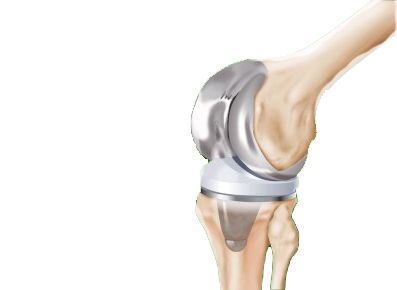
Knee implant

Lifestyle and Aging Population Continue to Drive Asian Orthopedic Device Market

By Ames Gross

In less than five years, the value of this market is expected to exceed $11 billion.

Continue reading →

Wearable Cloud, Medical Device Connectivity
June 16, 2017
Wearable Cloud, Medical Device Connectivity

FDA Sets Forth Digital Health Innovation Plan

By MedTech Intelligence Staff

The initiative also focuses on how devices will be regulated in the post-market world.

Continue reading →

Medtech, innovation
June 15, 2017
Medtech, innovation

Microfluidics Brings the Modern Lab to Point of Care

By Klaus Jopp

Research around the global is focusing on a faster, more precise approach in diagnostics.

Continue reading →

Duodenoscope, ECRI
June 13, 2017
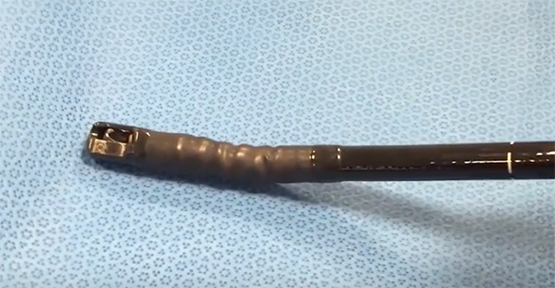
Duodenoscope, ECRI

510(k)s for Reusable Devices Must Include Validated Data for Cleaning in IFUs

By MedTech Intelligence Staff

Reusable devices have become more difficult to clean, disinfect and sterilize. FDA is now requiring clear instructions for effective reprocessing.

Continue reading →

Richard Satava, M.D.
June 5, 2017
Richard Satava, M.D.
MEDdesign

Surgical Energy: The Future and The Opportunity

By Richard M. Satava, M.D.

Energy is something we take for granted as we use it for surgery, but surgical energy is about to make its mark. Those who ignore what’s happening will be left behind.

Continue reading →

Combination product, human factors
May 22, 2017
Combination product, human factors

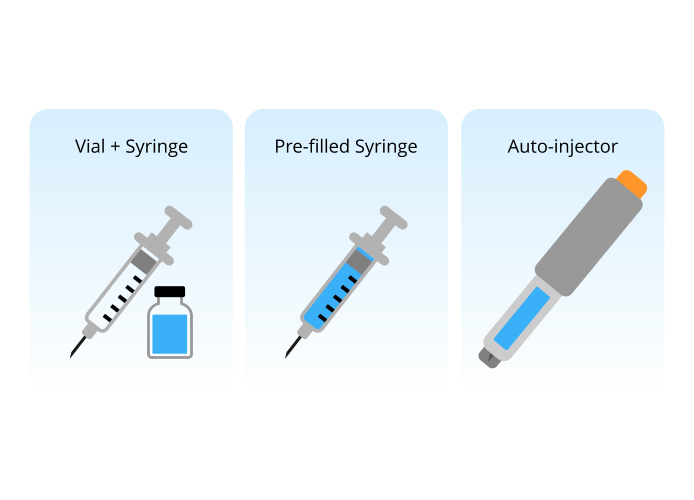
Optimize Combination Products: Select a Drug Delivery Device that Meets User Needs

By Allison Strochlic, Erin Davis

The device should be carefully matched to end users, rather than be an afterthought.

Continue reading →

MEDICA
May 18, 2017
MEDICA

Wanted: Innovative Medical Mobile Solutions for Competition

By MedTech Intelligence Staff

Developers from around the world can submit their mobile medical solution to the MEDICA App Competition.

Continue reading →

Post navigation

  • Previous
  • 1
  • …
  • 75
  • 76
  • 77
  • 78
  • 79
  • …
  • 110
  • Next

Upcoming Events & Webinars

No posts found.


On Demand Events & Webinars

No posts found.


Columns

October 8, 2026

MedTech Intelligence Industry Survey Research Methodology

By MedTech Intelligence Staff

The MedTech Intelligence Industry Survey is a primary research initiative designed to capture the perspectives of professionals working across the medical technology sector. The study is intended to examine the pressures, priorities, technology shifts, operational challenges, and strategic changes influencing MedTech organizations in 2026.

September 21, 2026

Reverse Engineering in Medical Device Design: When and Why It Makes Sense

By Khushali Solanki
Product Development, Human factors engineering

Reverse engineering carries a reputation problem in medical device circles; it sounds like copying. In practice, it's a legitimate engineering discipline with specific, defensible use cases: replacing obsolete components, improving an existing design's manufacturability, and indigenizing imported parts. This article looks at when reverse engineering genuinely makes sense in medical device development, the technical process involved, and the intellectual property considerations teams need to navigate before using it.

August 9, 2026

Why Organizations Miss Emerging Product Risk: Understanding the engineering mechanisms that remain hidden long before complaint trends become visible

By Aalap Patel, MS, CQE, CSSBB
post market surveillance

Emerging medical-device risks are often missed because early warning signs are fragmented across complaints, manufacturing, suppliers, returned products, clinical observations, and other data sources; not immediately as statistically significant trends. An engineering-centered, cross-functional approach connecting these weak signals to underlying mechanisms sooner, can improve designs, verification, manufacturing controls, and risk management before isolated issues become widespread quality problems.

August 3, 2026

Beyond the Status Report: Using LLMs to Reveal the True State of SaMD Development

By Shreya Sridhar
SaMD Readiness

Medical device software development teams have always struggled with a deceptively simple question: How much of the system is actually complete?

June 1, 2026

MedTech In Focus: AI impact in healthcare

By MedTech Intelligence Staff

The most recent AI thought leadership published on MedTechIntelligence.com.

May 10, 2026

Maintaining trust in medical AI: Monitoring and managing model lifecycle

By Anna Vuolo
Trust in AI

Healthcare environments are dynamic with patient populations, clinical practices and data collection methods continuously evolving. Similarly, effective AI systems depend on more than performance at initial deployment. They must be monitored and managed throughout their lifecycle to remain reliable, clinically relevant, and safe.

April 30, 2026

From Prototype to Production: Building a Validation Strategy That Scales with Manufacturing Volume

By Aniruddha Dhole

Validation documentation should define process parameters, monitoring strategies, and operating ranges that can support future production increases. How does a practical framework for validation, revalidation, and process control help during medical device scale-up?

April 1, 2026

The Human Side of AI Medical Devices: Why Safety Depends on Design, Not Just Algorithms

By Shreya Sridhar

Human factors engineering plays a critical role in the design of AI-enabled medical devices and whether they might improve care or introduce new risks.

TOPICS

  • Digital Health
  • MedTech Economics
  • Manufacturing Execution
  • Product Design & Development
  • Quality/Regulatory

Upcoming Events & Webinars

No posts found.

Contact Us

  • Advertising Opportunities
  • Editorial Submissions
  • General Inquiries
  • Privacy Policy
  • Cookie Policy
  • Sign Up for Newsletters

Innovative Publishing Company, Inc.

  • FoodSafetyTech
  • Food Safety Consortium Conference & Expo
  • MedTech Intelligence
  • Cannabis Industry Journal

© Copyright 2015 - 2026 Innovative Publishing Co., Inc., All Rights Reserved

Other Innovative Publishing Co., Inc. Sites: Food Safety Tech  |  Cannabis Industry Journal

We are using cookies to give you the best experience on our website.

You can find out more about which cookies we are using or switch them off in .

MedTech Intelligence
Powered by  GDPR Cookie Compliance
Privacy Overview

This website uses cookies so that we can provide you with the best user experience possible. Cookie information is stored in your browser and performs functions such as recognising you when you return to our website and helping our team to understand which sections of the website you find most interesting and useful.

Strictly Necessary Cookies

Strictly Necessary Cookie should be enabled at all times so that we can save your preferences for cookie settings.

We use tracking pixels that set your arrival time at our website, this is used as part of our anti-spam and security measures. Disabling this tracking pixel would disable some of our security measures, and is therefore considered necessary for the safe operation of the website. This tracking pixel is cleared from your system when you delete files in your history.

We also use cookies to store your preferences regarding the setting of 3rd Party Cookies.

Cookie Policy

A browser cookie is a small piece of data that is stored on your device to help websites and mobile apps remember things about you. Other technologies, including Web storage and identifiers associated with your device, may be used for similar purposes. In this policy, we say “cookies” to discuss all of these technologies.

Our Privacy Policy explains how we collect and use information from and about you when you use This website and certain other Innovative Publishing Co LLC services. This policy explains more about how we use cookies and your related choices.

How We Use Cookies

Data generated from cookies and other behavioral tracking technology is not made available to any outside parties, and is only used in the aggregate to make editorial decisions for the websites. Most browsers are initially set up to accept cookies, but you can reset your browser to refuse all cookies or to indicate when a cookie is being sent by visiting this Cookies Policy page. If your cookies are disabled in the browser, neither the tracking cookie nor the preference cookie is set, and you are in effect opted-out.

In other cases, our advertisers request to use third-party tracking to verify our ad delivery, or to remarket their products and/or services to you on other websites. You may opt-out of these tracking pixels by adjusting the Do Not Track settings in your browser, or by visiting the Network Advertising Initiative Opt Out page.

You have control over whether, how, and when cookies and other tracking technologies are installed on your devices. Although each browser is different, most browsers enable their users to access and edit their cookie preferences in their browser settings. The rejection or disabling of some cookies may impact certain features of the site or to cause some of the website’s services not to function properly.

Individuals may opt-out of 3rd Party Cookies used on IPC websites by adjusting your cookie preferences through this Cookie Preferences tool, or by setting web browser settings to refuse cookies and similar tracking mechanisms. Please note that web browsers operate using different identifiers. As such, you must adjust your settings in each web browser and for each computer or device on which you would like to opt-out on. Further, if you simply delete your cookies, you will need to remove cookies from your device after every visit to the websites. You may download a browser plugin that will help you maintain your opt-out choices by visiting www.aboutads.info/pmc. You may block cookies entirely by disabling cookie use in your browser or by setting your browser to ask for your permission before setting a cookie. Blocking cookies entirely may cause some websites to work incorrectly or less effectively.

The use of online tracking mechanisms by third parties is subject to those third parties’ own privacy policies, and not this Policy. If you prefer to prevent third parties from setting and accessing cookies on your computer, you may set your browser to block all cookies. Additionally, you may remove yourself from the targeted advertising of companies within the Network Advertising Initiative by opting out here, or of companies participating in the Digital Advertising Alliance program by opting out here.