
Five startups selected to participate in Memphis area Accelerator following The comprehensive 13-week go-to-market program is specifically designed to support medtech startups through essential business development stages.

Five startups selected to participate in Memphis area Accelerator following The comprehensive 13-week go-to-market program is specifically designed to support medtech startups through essential business development stages.

The MDIC Annual Public Forum 2024 kicked off this week with experts from the National Evaluation System for health Technology (NEST), the Centers for Medicare and Medicaid Services (CMS), and the FDA. Topics included the future of real-world evidence (RWE) and the integration of AI into the healthcare ecosystem and how can we leverage emerging technologies to bring innovative and safer solutions to patients.
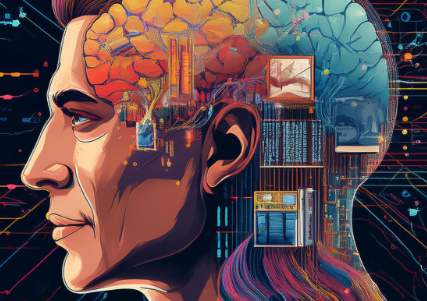
The value-based care model, with a substantial monetary budget, necessitates on-time and correct risk stratification. As a result, new and incumbent care providers and payers are reinventing healthcare delivery, looking towards cutting-edge GenAI and machine learning technology to radically transform the healthcare delivery paradigm. This article explores how GenAI and machine learning-based risk stratification are revolutionizing a new era of personalized care, resulting in improved healthcare functions for payers and providers.

MedTech organizations need to focus on the human factor of change and achieve top-down alignment, buy-in, accountability, and clear communication along the way.
MEDICA 2024 and COMPAMED 2024 trade fairs in Düsseldorf, Germany attract more than 6,000 exhibitors from about 70 countries. These events are globally unique information and business platforms for the entire value chain of medical technology systems and products – including development and manufacturing. MEDICA and COMPAMED will take place from November 11 – 14, 2024.
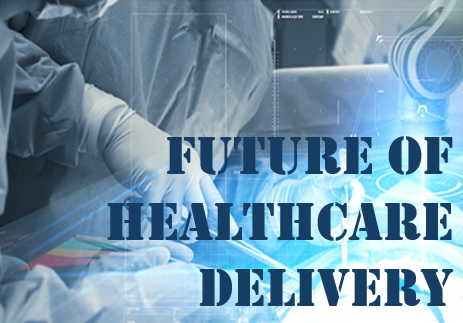
CitiusTech Senior VP and Market Head, Healthcare Providers, John Squeo, shares five game-changing shifts that will redefine the future of US healthcare and unlock a more streamlined, accessible and patient-centric system.

The future of healthcare lies in the successful integration of workflow automation and advanced technologies. As the buzz-word salad of AI, such as NLP, LLMs, Gen AI, RPA, etc continue to evolve, their potential to revolutionize healthcare workflows will only increase.
The EU Data Act will be applicable from September 12, 2025. Given the consequent steps that will be required to comply with the EU Data Act, medical and health devices’ companies would do well to already commence assessing what they will need to do to comply with it.
Study reveals limitations of large language AI models in medical coding.

Researchers have developed a new machine-learning model that can precisely make prognosis predictions for patients with osteosarcoma, based on the density of viable tumor cells post-treatment.